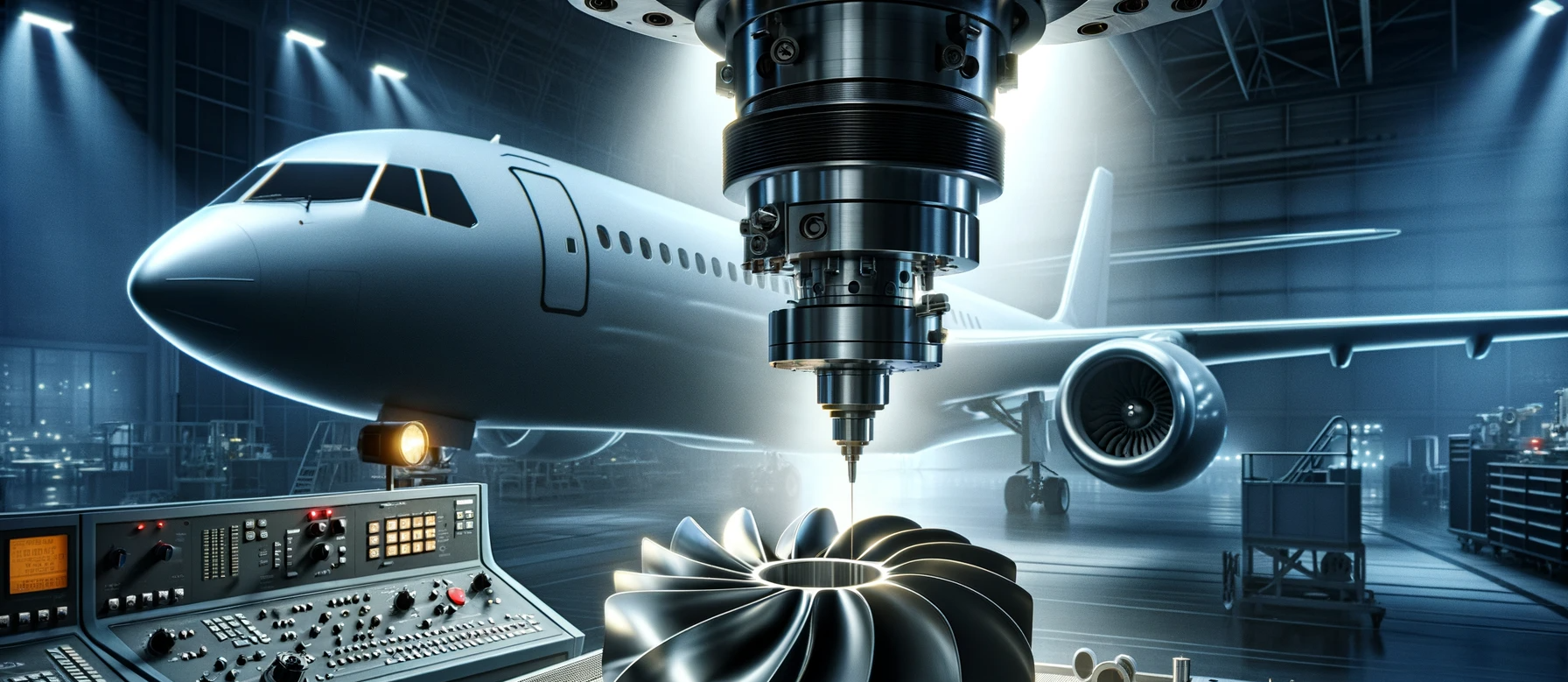
CNC (Computer Numerical Control) automated parts processing is integral to the aerospace industry due to its ability to deliver high-precision components that meet stringent safety, performance, and reliability standards. Aerospace applications demand materials and processes that can withstand extreme conditions such as high temperatures, pressure, and stress. CNC machining plays a crucial role in manufacturing a wide range of aircraft and spacecraft parts, including structural components, engine parts, landing gear, and avionics housings, ensuring the highest levels of accuracy and durability.
Structural Components:
CNC machining is used to manufacture aircraft and spacecraft structural parts, such as frames, fuselage panels, and wing spars. These components must meet exacting standards of strength and precision to ensure the integrity and aerodynamic performance of the vehicle.
Engine Parts:
CNC machines produce critical engine components like turbine blades, shafts, and casings. These parts are made from high-performance alloys and require tight tolerances and smooth surface finishes to ensure efficient fuel combustion, heat resistance, and longevity.
Landing Gear:
CNC machining is utilized in the production of landing gear components, which must endure significant stress during takeoff, landing, and taxiing. High-strength materials like titanium and steel alloys are commonly used, and CNC ensures precise dimensions and durability.
Avionics and Electronic Housings:
CNC machines are employed to create housings and enclosures for avionics systems, which include navigation, communication, and control electronics. These parts must be lightweight yet sturdy enough to protect sensitive electronics from environmental factors like vibration and extreme temperatures.
Aerospace Fasteners and Fittings:
CNC machining is essential for producing specialized fasteners, fittings, and connectors used throughout aircraft and spacecraft. These small yet critical parts require high precision to ensure secure connections and structural integrity.
Prototyping and Custom Aerospace Parts:
CNC machining supports rapid prototyping of aerospace components, allowing engineers to test and refine new designs before full-scale production. This is particularly important in aerospace R&D, where innovation and performance are key to developing advanced technologies.
CNC automated parts processing is fundamental to the aerospace industry, providing the precision, material versatility, and reliability required to produce critical components. From structural parts and engine components to fasteners and avionics housings, CNC machining ensures that aerospace products meet the demanding standards of performance and safety. By addressing common customer concerns related to materials, precision, quality control, and custom production, CNC machining remains an indispensable technology for the advancement of aerospace engineering.
If you have any questions please email me.
CNC machining in the aerospace industry often involves materials like aluminum, titanium, stainless steel, Inconel, and composites. These materials are selected for their lightweight properties, high strength, and ability to withstand extreme environmental conditions, including high temperatures and pressure.
CNC machining offers extremely high precision, often within tolerances as tight as a few microns. This level of accuracy is critical for ensuring that aerospace components fit together perfectly and perform reliably under extreme operating conditions, such as high altitudes, speed, and pressure.
Aerospace parts must meet strict quality and safety standards, such as AS9100 and ISO 9001. CNC machining incorporates advanced quality control techniques, including in-process monitoring, coordinate measuring machines (CMM), and non-destructive testing (NDT) to ensure that each part meets these standards and is free from defects.
Yes, CNC machining is highly adaptable and can produce custom aerospace components tailored to specific design requirements. This capability is especially valuable for creating prototypes, specialized parts for experimental aircraft, or limited-production aerospace systems.
Lead times for CNC-machined aerospace components depend on the complexity of the part and the material used. However, CNC machining is known for its ability to deliver high-quality parts in a shorter timeframe than traditional manufacturing methods, especially when using rapid prototyping for design iterations.
CNC machining ensures that aerospace components are manufactured with the highest precision and meet strict tolerances, contributing to the performance and safety of the aircraft or spacecraft. By delivering parts that can endure extreme conditions without failure, CNC machining helps improve the reliability, efficiency, and longevity of aerospace systems.