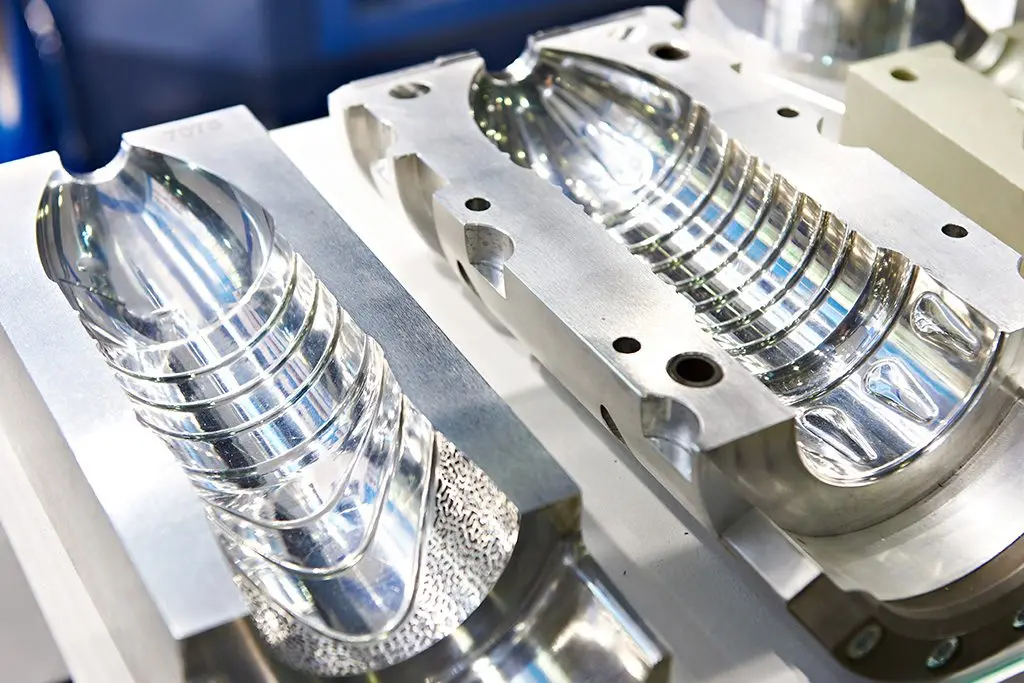
CNC (Computer Numerical Control) automated parts processing plays a vital role in the mold industry, where precision and efficiency are key to producing high-quality molds for a wide range of applications. Molds are used in various manufacturing processes, such as injection molding, blow molding, die casting, and forging, to create complex shapes and components from materials like plastics, metals, and ceramics. CNC machining offers significant advantages in the design, fabrication, and finishing of molds, making it an essential technology for mold manufacturers.
Precision Mold Making:
CNC machining ensures high precision and tight tolerances in the creation of mold cavities, cores, and inserts. This precision is critical for molds that are used to produce complex and intricate components, ensuring that the final product meets exact design specifications.
Custom and Complex Mold Designs:
CNC machining allows for the production of highly complex and customized molds that may include intricate geometries, fine details, and undercuts. This capability is essential for industries like automotive, aerospace, electronics, and consumer products, where unique and detailed parts are required.
Rapid Prototyping and Tooling:
CNC machining supports rapid prototyping, enabling mold manufacturers to quickly create prototypes and tools for testing before full-scale production. This reduces lead times and allows for faster product development cycles, giving companies a competitive edge in the market.
Material Versatility:
CNC machines can work with a variety of materials commonly used in mold making, such as tool steels, aluminum, copper alloys, and hardened metals. The ability to process these materials with high precision makes CNC machining ideal for producing durable and high-performance molds.
Finishing and Surface Treatment:
CNC machines are also used for finishing mold components, including polishing, deburring, and other surface treatments. This ensures that the molds are smooth and free of defects, which is critical for achieving high-quality finishes in the products produced using the molds.
If you have any questions please email me.
CNC machining can work with a wide range of materials used in mold making, including tool steels (like H13 and P20), aluminum, copper alloys, and various hardened metals. These materials are chosen based on their strength, durability, and ability to withstand the high pressures and temperatures of molding processes.
CNC machining can achieve extremely tight tolerances, often within microns, making it ideal for precision mold making. This level of accuracy ensures that the molds are capable of producing parts that meet exact specifications, which is crucial in industries such as automotive and electronics.
Lead times can vary depending on the complexity of the mold and the material being used. However, CNC machining generally offers faster production times compared to traditional mold-making methods, particularly when combined with rapid prototyping for testing and adjustments.
Yes, CNC machining is highly versatile and can produce complex, customized mold designs. Whether the mold requires intricate details, fine textures, or undercuts, CNC machines can precisely cut and shape the materials to meet even the most challenging design requirements.
Quality assurance is a top priority in CNC machining for molds. Advanced inspection techniques, such as coordinate measuring machines (CMM) and in-process monitoring, are used to ensure that each mold component meets the required specifications. Additionally, surface finishing processes are applied to eliminate defects and enhance the mold’s performance.